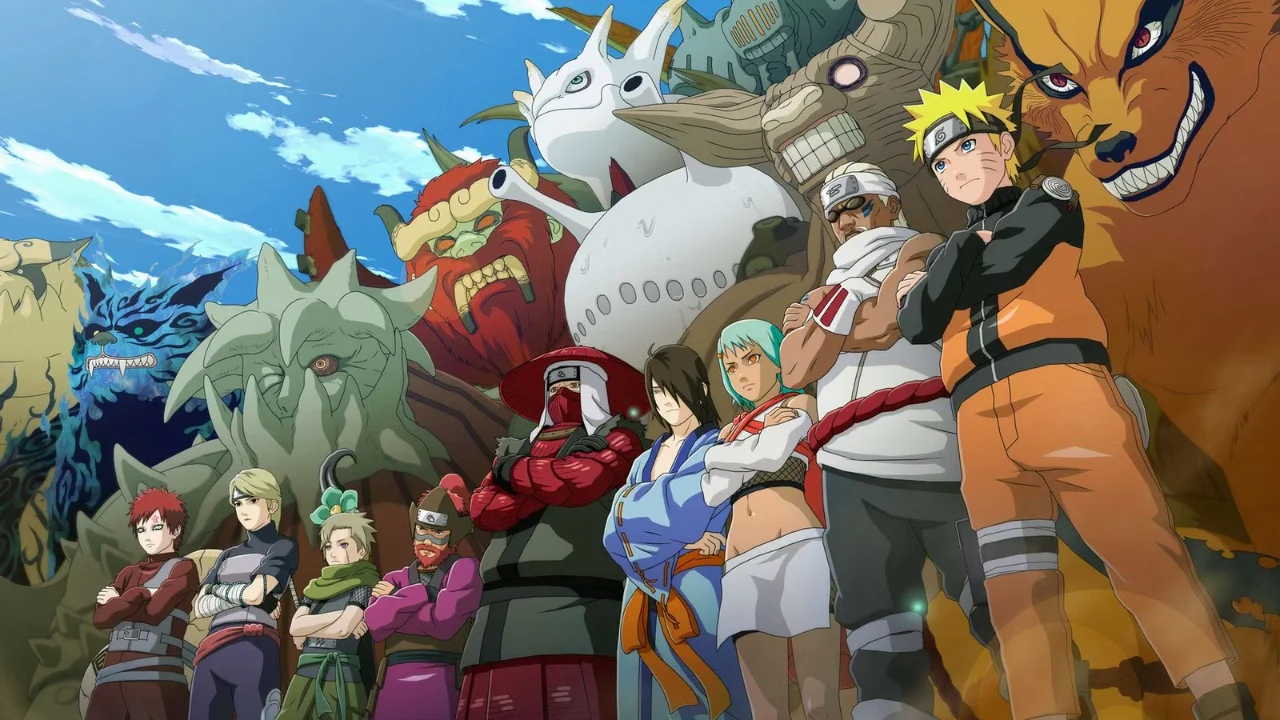
Tailed Beasts - nine unique creatures created by the Sage of Six Paths Hagoromo Otsutsuki from the chakra of the Ten-Tails. Each bijuu possesses a huge reserve of chakra, its own appearance, personality, and unique abilities. Their number of tails - from one to nine - became the main way to distinguish the beasts.
In the world of Naruto, tailed beasts are known as biju. Throughout shinobi history, they were used as weapons and sealed into people, turning them into jinchuriki. The Nine-Tailed Kurama plays a particularly important role in the story, as it was first sealed into Kushina Uzumaki, and then into Naruto.
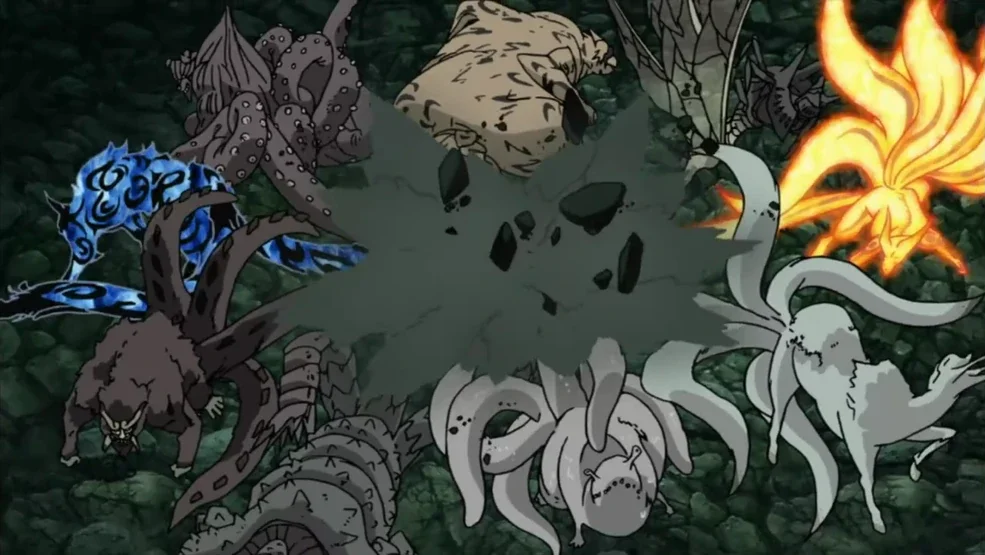
In total, there are nine tailed beasts:
Number of tails | Name | Japanese name | Known jinchuriki |
|---|---|---|---|
1 | 守鶴 | Gaara, Bunpuku | |
2 | Matatabi | 又旅 | |
3 | Isobu | 磯撫 | |
4 | Son Goku | 孫悟空 | |
5 | Kokuo | 穆王 | |
6 | Saiken | 犀犬 | |
7 | Chōmei | 重明 | |
8 | Gyūki | 牛鬼 | |
9 | Kurama | 九喇嘛 | Mito Uzumaki, Kushina Uzumaki, Naruto Uzumaki |
What are the tailed beasts?
The tailed beasts are living beings composed primarily of chakra. Unlike ordinary animals, they possess colossal power, intelligence, and the ability to speak. Each bijuu has its own personality and is not merely a mindless weapon.
Originally, all tailed beasts were part of the Ten-Tails — a monstrous creature connected to the God Tree. After defeating the Ten-Tails, Hagoromo Ōtsutsuki divided its chakra into nine independent beings.
This is how they appeared:
Shukaku → Matatabi → Isobu → Son Goku → Kokuo → Saiken → Chomei → Gyuki → Kurama.
The Ten-Tails itself did not disappear completely in the process: its body was sealed, and subsequently various forces tried to restore it.
Why are the tailed beasts called bijū?
The Japanese word bijū (尾獣, bijū) literally means "tailed beast."
The number of tails became a kind of designation for each creature:
* Shukaku — One-Tailed;
* Matatabi — Two-Tailed;
* Isobu — Three-Tailed;
* Son Goku — Four-Tailed;
* Kokuo — Five-Tailed;
* Saiken — Six-Tailed;
* Chomei — Seven-Tailed;
* Gyuki — Eight-Tailed;
* Kurama — Nine-Tailed.
The more tails a beast has, the more powerful it is generally considered to be, but this does not mean that the strength of the beasts is determined solely by their number of tails.
1. Shukaku — One-Tailed
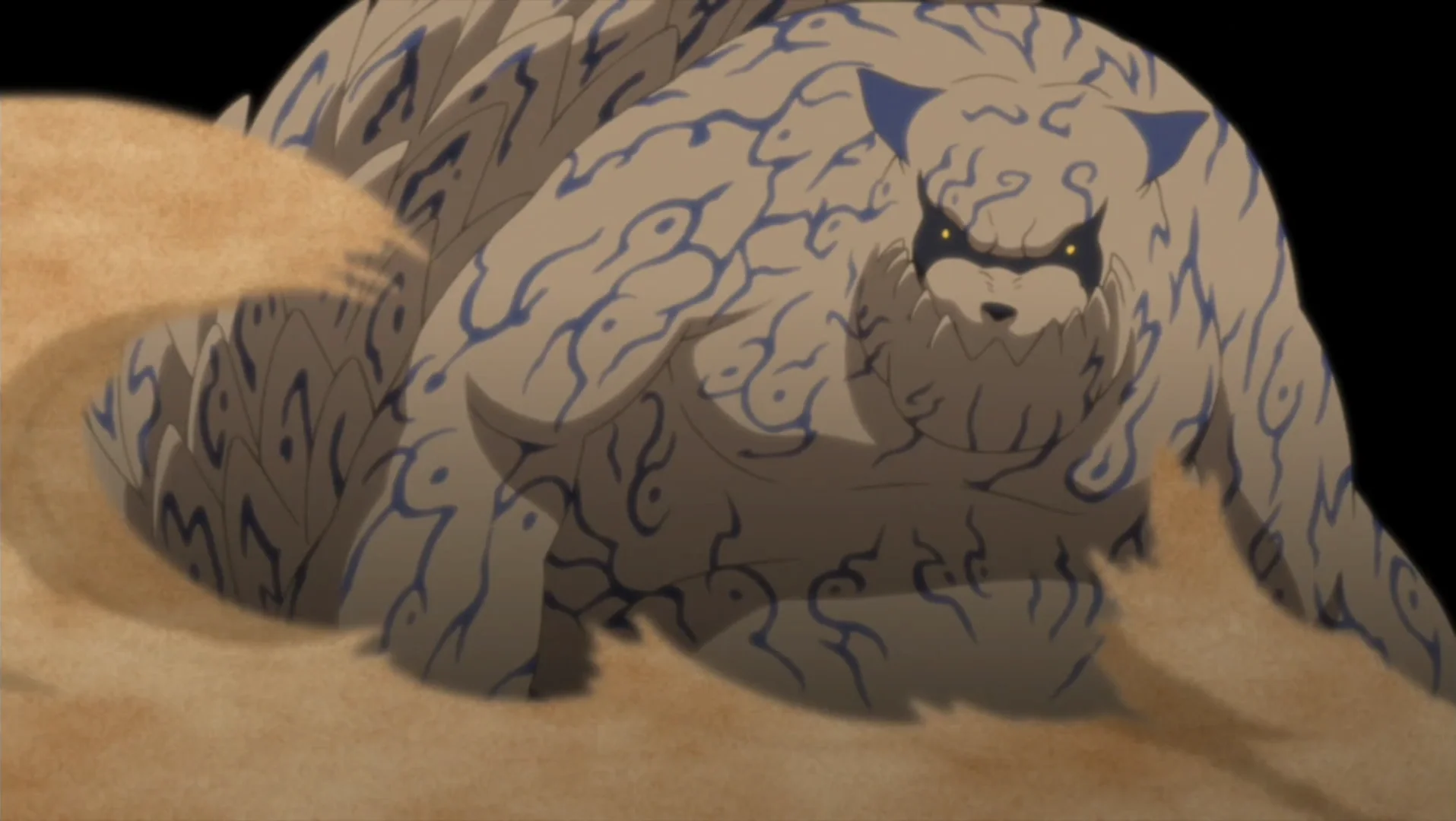
Shukaku — a One-Tailed beast, resembling a giant tanuki — the Japanese raccoon dog.
It is associated with the **Land of Wind** and the **Hidden Sand Village** and is one of the most well-known tailed beasts.
Shukaku has an extremely hot-tempered nature and a tendency toward aggression. He does not trust people and for a long time perceived jinchuriki primarily as a prison for his own chakra.
Shukaku's abilities
The main feature of Shukaku is his enormous chakra reserve and the ability to use techniques related to sand and wind.
Among his abilities:
* sand manipulation;
* use of enormous volumes of chakra;
* creation of powerful defensive structures;
* Wind Release techniques;
* Tailed Beast Ball;
* creation and control of sand flows;
* the ability to fight independently even after separation from the jinchuriki.
Shukaku is also able to use the cursed seal, associated with his power, and to influence the mind of his host.
Jinchuriki of Shukaku
The most famous jinchuriki of Shukaku is Gaara.
In childhood, Shukaku was sealed inside Gaara by order of the Fourth Kazekage. Because of this, Gaara grew up in conditions of constant fear and alienation.
Later, Akatsuki extracted Shukaku from Gaara.
After that, Gaara lost his tailed beast, but continued to remain one of the strongest shinobi of the Hidden Sand.
2. Matatabi — the Two-Tails
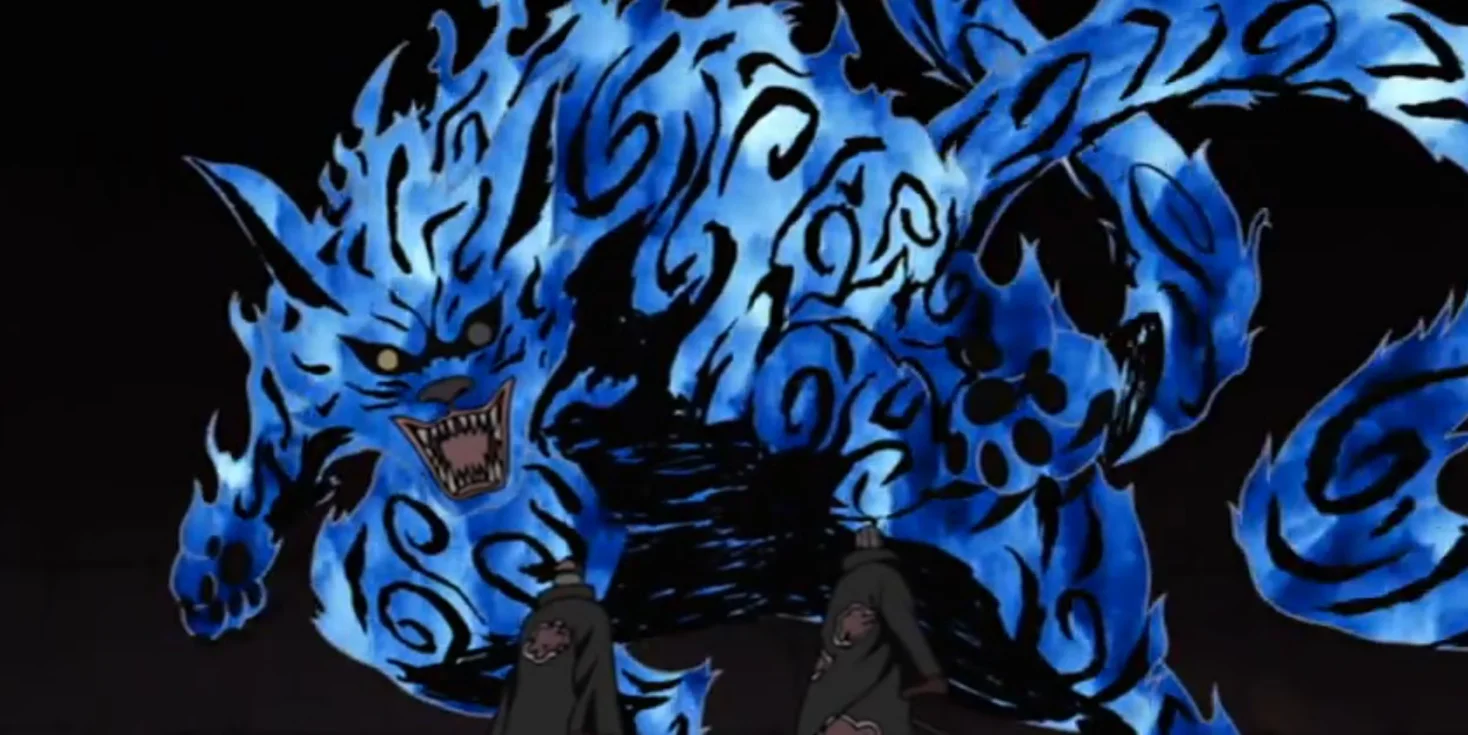
Matatabi is a Two-Tailed beast that looks like a huge cat with flames all over its body.
Matatabi is connected to the **Hidden Cloud Village** and was sealed inside Yugito Nii.
Unlike many other tailed beasts, Matatabi is distinguished by comparatively calm and respectful behavior.
Abilities of Matatabi
The main feature of Matatabi is the use of fire.
She is capable of:
* creating and controlling flames;
* using powerful fire attacks;
* sharply increasing physical strength;
* transforming her body into a huge fire creature;
* creating a Tailed Beast Ball;
* transferring chakra to her jinchuriki.
Matatabi is particularly notable for combining enormous physical strength with high speed.
Jinchūriki of Matatabi
The most famous jinchūriki of Matatabi is Yugito Nii, a kunoichi of Hidden Cloud.
Yugito learned to control the transformation into the Two-Tails significantly better than many other jinchūriki.
Akatsuki captured Yugito and extracted Matatabi from her body.
3. Isobu — the Three-Tails
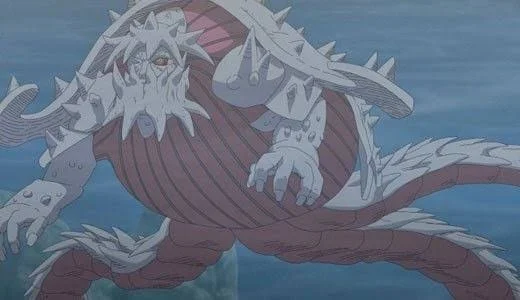
Isobu is a Three-Tails bijū resembling a giant turtle with features of a shrimp and a crab.
After the events involving Konoha, Isobu became connected to Rin Nohara, and later its jinchūriki became Yagura, the Fourth Mizukage.
Isobu's abilities
Isobu possesses a unique combination of water and physical attacks.
It is capable of:
* creating enormous water currents;
* moving underwater;
* using its shell for defense;
* creating corals;
* attack with enormous claws and tails;
* use Bijudama;
* transferring chakra to her jinchuriki.
One of Isobu's distinctive features is the ability to create coral structures that can restrict the enemy's movements.
Isobu's Jinchuriki
Isobu was connected to Rin Nohara, however her story ended tragically.
Later, the Three-Tails was wielded by Yagura, the Fourth Mizukage of Kirigakure.
After Yagura's death, Isobu existed for some time without a jinchuriki.
Subsequently, Akatsuki captured and extracted it.
4. Son Goku — Four-Tails
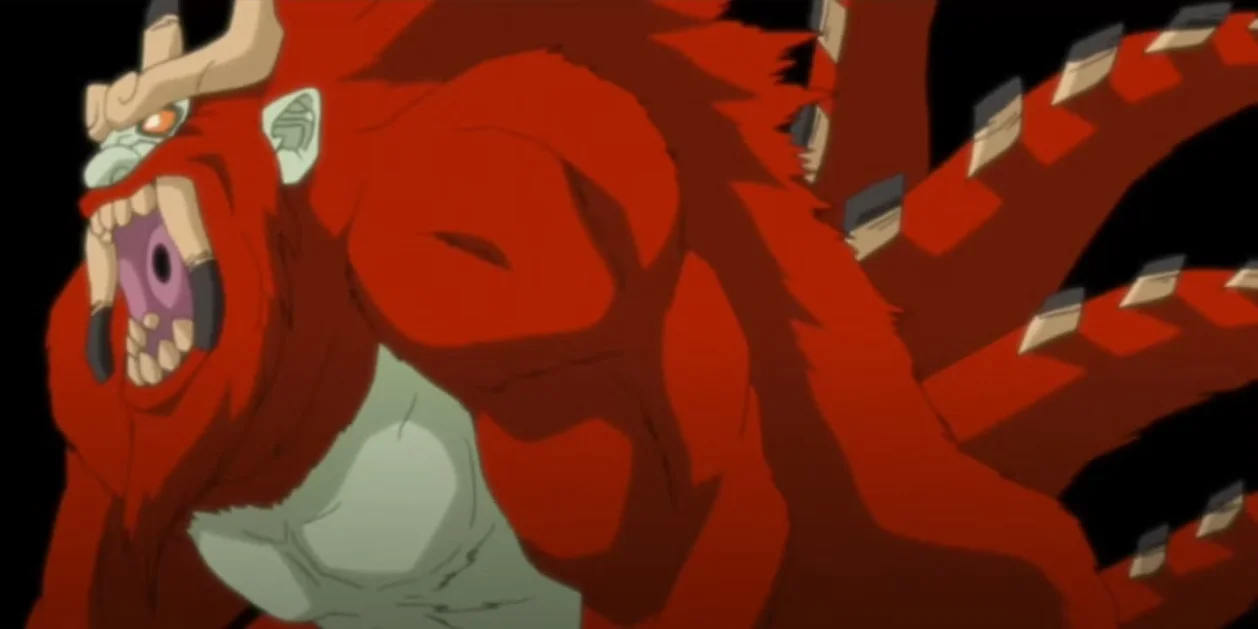
Son Goku - Four-Tails, outwardly resembling a huge four-tailed monkey.
His name references the legendary character Sun Wukong from Chinese mythology and the classical novel "Journey to the West".
Son Goku possessed a proud and independent character.
Son Goku's abilities
The Four-Tails is especially known for using the Lava Release.
It is capable of:
* use Yoton - the Lava Release;
* create molten streams;
* deliver powerful physical blows;
* use Bijudama;
* transmit chakra;
* turn his jinchuriki into the Four-Tails form.
Son Goku also stands out for his enormous physical strength.
Son Goku's jinchuriki
The main jinchuriki of the Four-Tails was Roshi from the Hidden Stone.
Roshi was an experienced shinobi and was able to learn to use Son Goku's power.
However, their relationship was not ideal: Son Goku treated people with distrust for a long time.
Roshi was captured by **Kisame** and **Itachi**, after which Son Goku was extracted from his body.
5. Kokuo — the Five-Tails
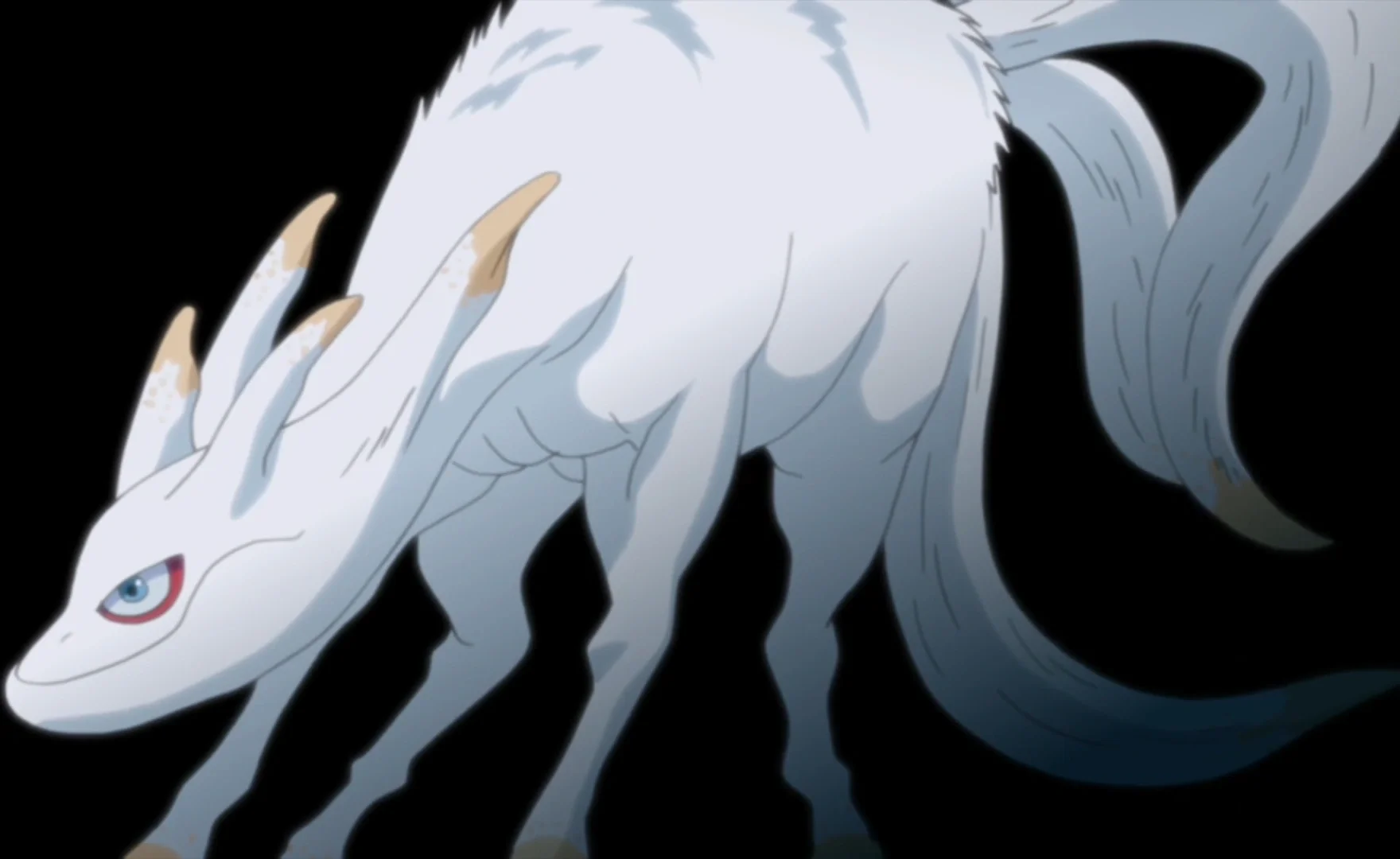
Kokuo is the Five-Tails, outwardly resembling a white horse with dolphin features.
He was linked to the Hidden Stone Village.
Kokuo is considered one of the calmest and most restrained of the tailed beasts.
Kokuo's abilities
Kokuō uses a combination of immense physical strength and the Boil element.
His abilities include:
* Yōton and related techniques;
* steam generation;
* enhancement of physical characteristics;
* powerful horn attacks;
* a Tailed Beast Ball;
* transferring chakra to its jinchūriki.
One of Kokuō's most interesting features is the ability to use the Steam element, which allows significantly enhancing physical power.
Kokuō's jinchūriki
The five-tailed beast was possessed by Han, a shinobi of the Hidden Stone.
Han used Kokuō's power and created his own fighting style based on body enhancement.
Like most other jinchūriki, Han ultimately became a victim of the Akatsuki.
6. Saiken — the Six-Tailed Beast
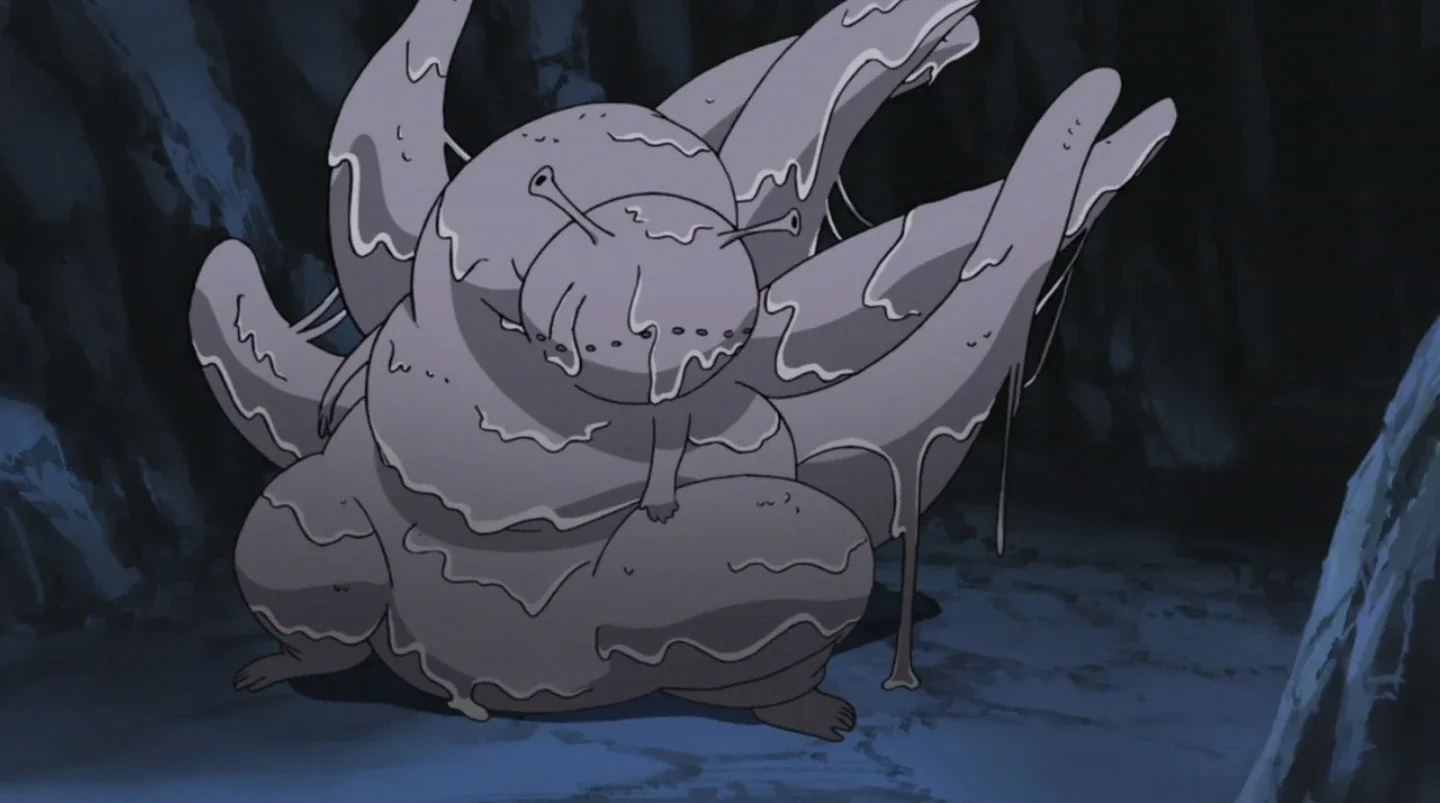
Saiken is the six-tailed Tailed Beast, outwardly resembling a giant slug.
It has a light-colored body and several tails resembling tentacles.
Saiken is linked to Utakata, one of Naruto's most famous jinchuriki.
Saiken's abilities
Unlike many other bijuu, Saiken specializes in liquids.
It is capable of:
* create a sticky liquid;
* use acid attacks;
* release bubbles;
* create huge streams of liquid;
* use Bijudama;
* transmit chakra;
* strengthen its jinchuriki.
Its liquids are capable of dealing serious damage to an opponent and restricting their movements.
Saiken's jinchuriki
The most famous jinchuriki of the Six-Tails was Utakata.
He was a master of bubble techniques and hid from other shinobi for a long time.
Utakata died after an attack by Akatsuki, and Saiken was extracted from his body.
7. Chomei — Seven-Tails
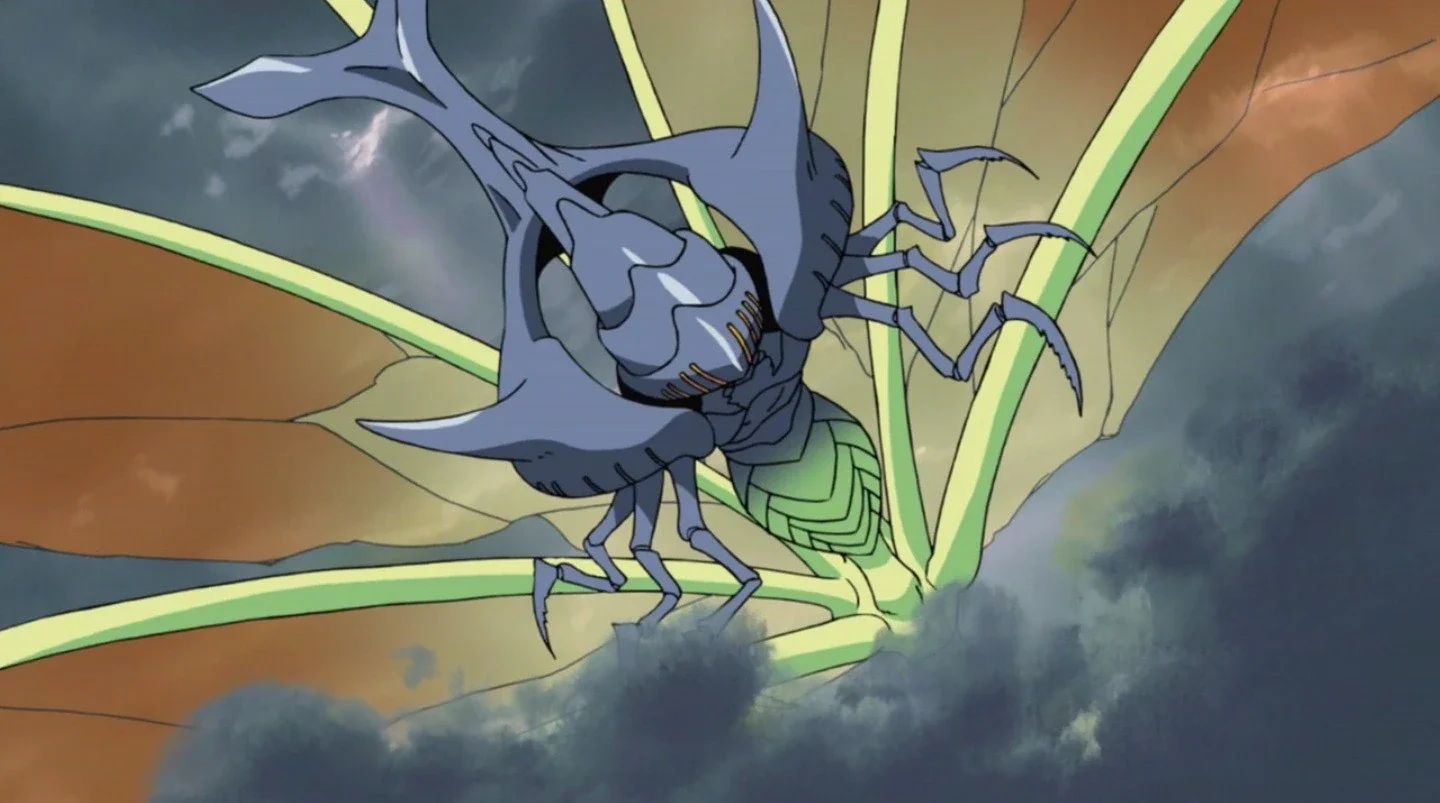
Chomei - A seven-tailed beast, resembling a giant insect.
His appearance combines features of a beetle and a flying insect, and his seven tails resemble wings and additional limbs.
Chomei was associated with the **Village Hidden in the Waterfall**.
Chomei's abilities
Chomei possesses the ability to fly and use special chakra.
It is capable of:
* flying;
* creating wings;
* using powerful physical attacks;
* releasing chakra;
* creating a Tailed Beast Ball;
* transferring chakra to his jinchuriki;
* using powder and particles associated with his body.
Chomei's jinchuriki
The most well-known jinchuriki of the Seven-Tails is Fuu, a kunoichi from the Hidden Waterfall.
Fuu was distinguished by a cheerful personality and a desire to communicate with other people.
However, her fate turned out to be tragic: the Akatsuki captured Fuu and extracted Chomei from her.
8. Gyuki — the Eight-Tails
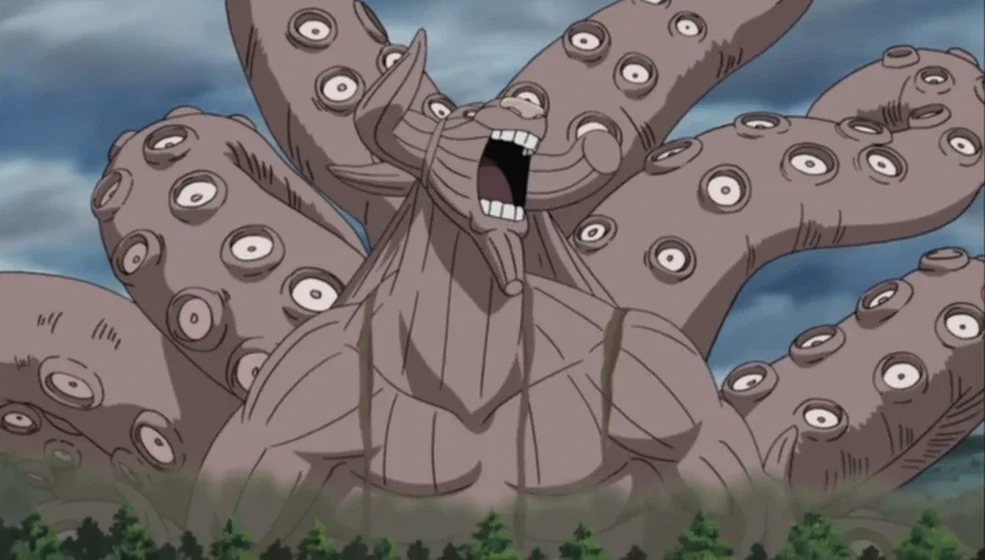
Gyuki - the Eight-Tails, one of the strongest and most famous tailed beasts.
His body combines traits of a giant bull and an octopus: the upper part resembles a bull, while the eight tails are tentacles.
Gyuki is connected to the Hidden Cloud Village.
Unlike most biju, Gyuki managed to establish a very strong bond with his jinchuriki.
Gyuki's abilities
Gyuki possesses a huge reserve of chakra and colossal physical strength.
It is capable of:
* use Bijudama;
* create powerful tentacles;
* attack with enormous physical blows;
* use chakra to enhance the jinchuriki;
* recover after damage;
* transform into the full Eight-Tails form.
Gyuki's jinchuriki
The main jinchuriki of Gyuki is Killer Bee.
It is Bee who is one of the few people who managed to establish a true partnership with the tailed beast.
Instead of constantly suppressing Gyūki, Bee learned to cooperate with him.
That is why he is able to almost fully control the form of the Eight-Tails.
Gyūki also played an important role during the Fourth Shinobi World War.
9. Kurama — the Nine-Tails
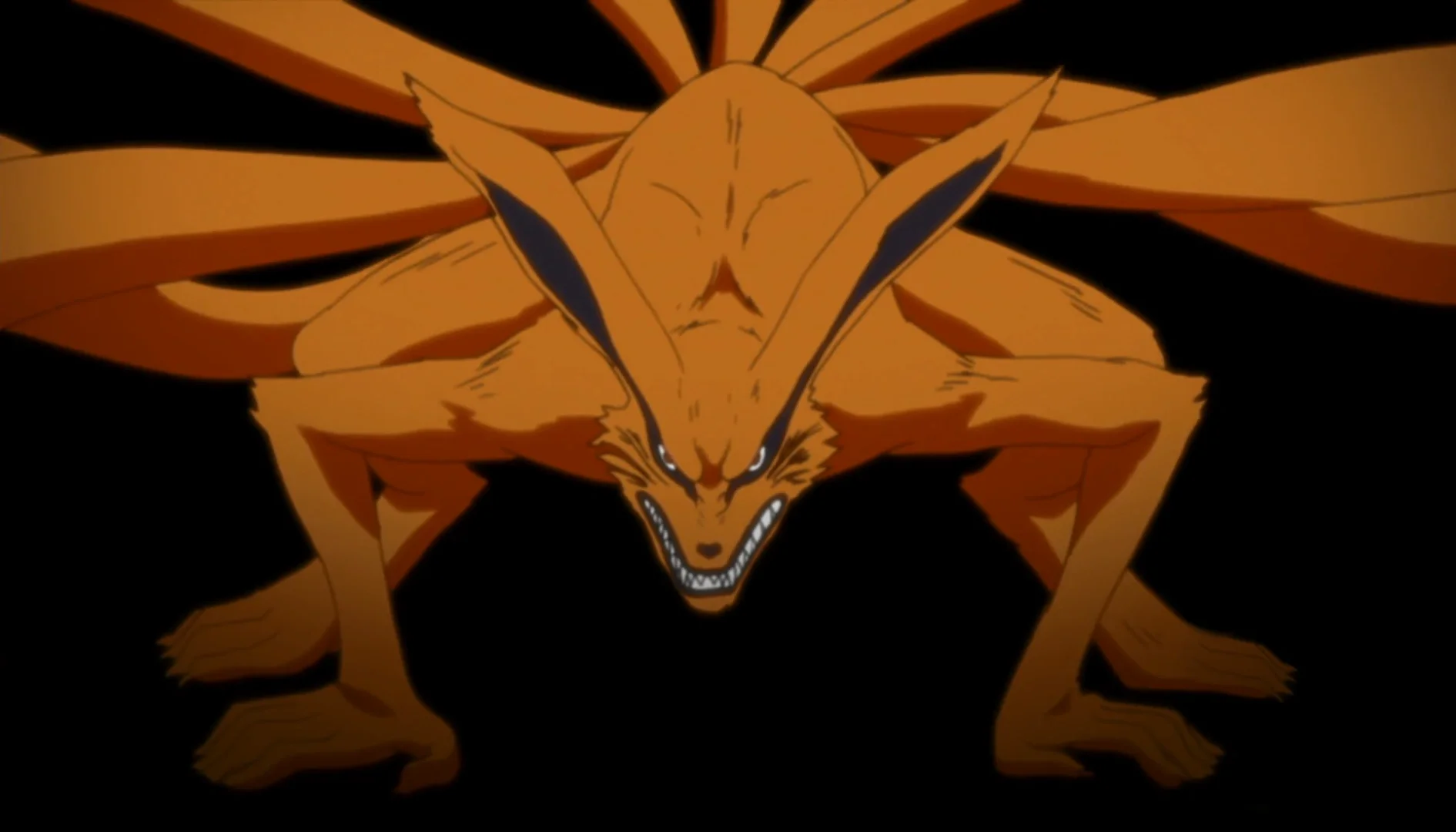
Kurama, formerly known as the Nine-Tailed Fox, is the most famous tailed beast in the entire history of Naruto.
He looks like a huge fox with nine tails and possesses a colossal amount of chakra.
Kurama was created by Hagoromo Ōtsutsuki from a portion of the Ten-Tails' chakra.
At the beginning of Naruto's story, Kurama is presented as a dangerous and hostile beast, but gradually his true personality is revealed.
Kurama's Abilities
Kurama possesses one of the largest chakra reserves among all the bijū.
His abilities include:
* a Tailed Beast Ball;
* enormous physical strength;
* incredible speed;
* regeneration;
* chakra transfer;
* creation of chakra limbs;
* jinchuriki enhancement;
* Kurama Mode;
* participation in creating Naruto's most powerful techniques.
Kurama's chakra is capable of strengthening a person so greatly that the jinchuriki receives a huge boost in speed, strength, and endurance.
Kurama's Jinchuriki
Throughout history, Kurama was sealed within several people.
Mito Uzumaki
Mito became the first known jinchuriki of Kurama.
She was the wife of Hashirama Senju and played an important role in the history of Konoha.
Kushina Uzumaki
The next jinchuriki was Kushina Uzumaki.
Thanks to the traits of the Uzumaki clan, she possessed a body capable of withstanding a huge amount of Kurama's chakra.
After Naruto's birth, the seal weakened, which allowed Obito to release the Nine-Tails.
Naruto Uzumaki
After the Nine-Tails' attack on Konoha, Minato Namikaze divided Kurama's chakra and sealed it within the newborn Naruto.
It is from this very moment that the main character's history as a jinchūriki begins.
The relationship between Naruto and Kurama gradually changed.
At first, Naruto perceived the Nine-Tails as a curse, while Kurama saw in the man only another jailer.
However, over time they learned to trust each other and became true allies.
The Ten-Tails — the ancestor of the nine tailed beasts
Although the Ten-Tails does not belong to the nine bijū, it must be mentioned to understand the origin of the tailed beasts.
The Ten-Tails, or Jūbi, was connected to the God Tree and was the source of the chakra from which the nine tailed beasts subsequently appeared.
Hagoromo Ōtsutsuki and Hamura Ōtsutsuki stopped the Ten-Tails, after which Hagoromo became its jinchūriki.
Before his death, Hagoromo divided the Ten-Tails' chakra into nine parts.
That is how the nine bijū appeared.
Therefore, the nine tailed beasts can be regarded as separate incarnations of parts of the Ten-Tails' chakra.
How did the nine tailed beasts appear?
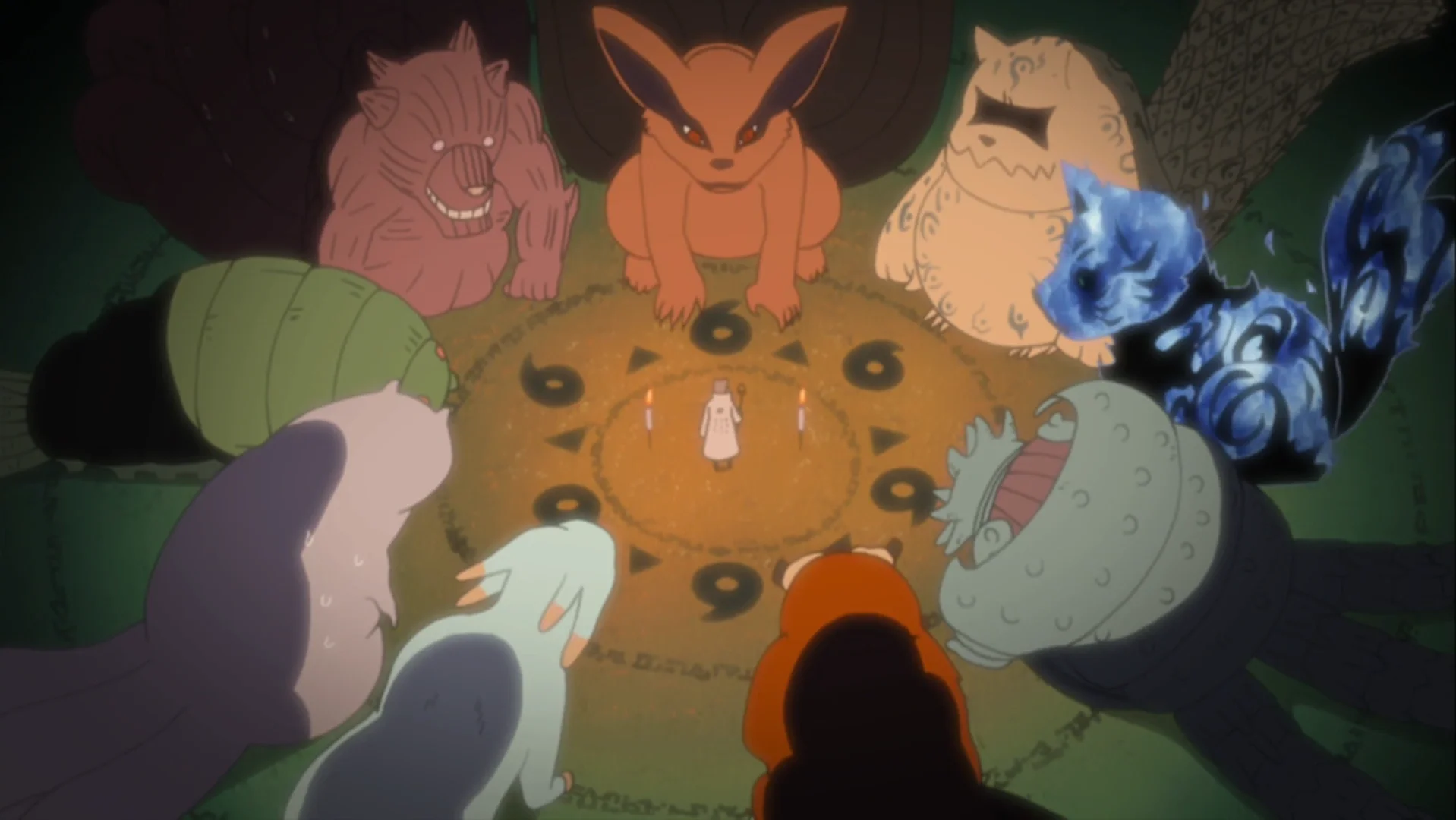
The history of the bijū's creation begins with Kaguya Ōtsutsuki.
Kaguya arrived on Earth and used the power of the God Tree. After the birth of Hagoromo and Hamura, events occurred that led to the appearance of the Ten-Tails.
Later, Hagoromo became its jinchūriki.
Realizing that his life was coming to an end, Hagoromo used the Creation of All Things Technique to split the Ten-Tails' chakra.
This is how nine independent beings came into being.
That is why each bijuu has its own personality, consciousness, and individuality.
All tailed beasts by number of tails
If you arrange the bijuu from one tail to nine, you get:
1. Shukaku — One-Tailed
2. Matatabi — Two-Tailed
3. Isobu — Three-Tailed
4. Son Goku — Four-Tailed
5. Kokuo — Five-Tailed
6. Saiken — Six-Tailed
7. Chomei — Seven-Tailed
8. Gyuki — Eight-Tailed
9. Kurama — Nine-Tailed
At the same time, the number of tails is not an absolutely accurate scale of strength, but as a rule strength is judged by them.
Who is the strongest tailed beast?
If one takes into account exclusively the amount of chakra and the traditional perception of bijuu strength, Nine-Tailed Kurama is considered one of the most powerful.
However, comparing tailed beasts is not limited only to the number of tails.
Gyuki, for example, possesses enormous combat power and has exceptionally effective synergy with Killer B. Other tailed beasts also possess unique abilities that can be especially dangerous in certain situations.
Moreover, the strength of a jinchūriki depends not only on the beast itself, but also on how well a person knows how to use its chakra.
All jinchūriki of the tailed beasts
Bijū | Jinchūriki |
|---|---|
Shukaku | Bunpuku, Gaara |
Matatabi | Yugito Nii |
Isobu | Rin Nohara, Yagura |
Son Goku | Roshi |
Kokuo | Han |
Saiken | Utakata |
Chōmei | Fū |
Gyūki | Killer Bee |
Kurama | Mito Uzumaki, Kushina Uzumaki, Naruto Uzumaki |
There were also other temporary or incomplete carriers of the bijū chakra, and during the Fourth Great Ninja War, the shinobi Obito and Madara used various ways to control the tailed beasts.
What is a jinchūriki?
Jinchūriki is a person in whom a tailed beast is sealed.
Sealing a bijū allowed villages to gain access to a huge source of chakra, but the life of a jinchūriki was often extremely hard.
Many hosts were subjected to:
* fear from those around them;
* isolation;
* exploitation;
* attempts to capture them;
* experiments;
* being used as weapons.
Naruto shows this side of the story especially well.
At the beginning of his journey, Naruto was rejected by Konoha's residents not for his own actions, but because of Kurama, who was sealed inside him.
Over time, Naruto proved that a jinchūriki does not necessarily have to be a weapon of his village.
Why did Akatsuki hunt the tailed beasts?
One of Akatsuki's main goals was to collect all the tailed beasts.
The organization captured jinchūriki, after which it extracted the bijū from them and sealed their chakra into the Gedo Mazo.
For Akatsuki, the tailed beasts were necessary to carry out a plan related to the Ten-Tails.
That is why many jinchūriki became victims of the organization's members.
Among those captured were:
* Gaara;
* Yugito;
* Roshi;
* Han;
* Utakata;
* Fū;
* other tailed beast hosts.
Killer B and Naruto became some of the most important exceptions.
What happens to a jinchūriki after the bijū is extracted?
In most cases, extracting the tailed beast leads to the death of the jinchūriki.
That is why the Akatsuki's hunt was so dangerous.
However, there are exceptions associated with the characteristics of the organism, enormous vitality, or special circumstances.
The Uzumaki Clan is especially known for its ability to survive the consequences of sealing and extracting a biju thanks to extraordinary vitality.
Can tailed beasts die?
Tailed beasts differ from ordinary living beings.
If a biju is destroyed, its chakra can recover over time and lead to its return.
Therefore, the death of a tailed beast does not necessarily mean final disappearance.
It is precisely the nature of biju as beings of chakra that makes them unique.
Can tailed beasts talk?
Yes.
All nine biju possess intelligence and are able to talk.
They have their own:
* personalities;
* memories;
* views on people;
* relationships with each other;
* desires;
* the ability to make decisions independently.
Throughout the plot, the change in the relationship between Naruto and the other bijū is especially noticeable.
Naruto gradually begins to perceive them not as weapons, but as independent beings.
Which tailed beasts are the strongest?
It is difficult to give an unambiguous ranking of the bijū's strength, but several of the most dangerous ones can be conditionally singled out:
Kurama
Possesses a huge amount of chakra and is considered one of the strongest bijū.
Gyūki
A very powerful fighter, especially thanks to the perfect interaction with Killer B.
Son Goku
Possesses enormous physical strength and uses the Lava release.
Kokuo
Combines the power of a bijū with powerful Boil release techniques.
At the same time, each tailed beast has unique advantages, so in a specific battle the result may depend on the opponent and the conditions of the fight.
The tailed beasts and Naruto
The history of the tailed beasts is one of the central themes of the entire series.
At the beginning of the story, Kurama seems like just a demon sealed inside Naruto.
However, the true history of the bijū is gradually revealed.
It turns out that they:
* possess consciousness;
* have their own names;
* remember Hagoromo;
* are connected to each other;
* are able to cooperate;
* do not necessarily want to harm people.
Naruto becomes the first person who managed to build relationships not only with Kurama, but also with other tailed beasts.
This becomes especially important during the Fourth Shinobi World War.
Table of all tailed beasts
№ | Bijū | Appearance | Main feature | Known jinchūriki |
|---|---|---|---|---|
1 | Shukaku | Tanuki | Sand, wind | Gaara |
2 | Matatabi | Cat | Fire | Yugito |
3 | Isobu | Turtle | Water, corals | Yagura |
4 | Son Goku | Monkey | Lava | Roshi |
5 | Kokuo | Horse/Dolphin | Boiling | Han |
6 | Saiken | Slug | Acid, liquids | Utakata |
7 | Chōmei | Insect | Flight, chakra | Fū |
8 | Gyūki | Bull/octopus | Enormous physical strength | Killer Bee |
9 | Kurama | Fox | Huge chakra reserve | Naruto |
Tailed beasts in a nutshell
If you need the shortest list:
Shukaku — the One-Tailed sand tanuki.
Matatabi — the Two-Tailed fire cat.
Isobu — the Three-Tailed turtle.
Son Goku — the Four-Tailed monkey wielding Lava.
Kokuo — the Five-Tailed horse using Boil.
Saiken — the Six-Tailed slug.
Chomei — the Seven-Tailed insect.
Gyuki — the Eight-Tailed ox-octopus.
Kurama — the Nine-Tailed fox and the most famous biju.
Conclusion
The nine tailed beasts are one of the most important parts of the Naruto world. They originated from the chakra of the Ten-Tails, divided by Hagoromo Otsutsuki, and over the course of history turned from weapons of the great villages into independent characters with their own personalities and fates.
Each bijuu has a unique appearance, abilities, and history, and the people in whom they were sealed - the jinchuriki - played a huge role in the history of the shinobi world.
The most famous tailed beast remains Kurama, but Naruto's story shows that all nine bijū are far more than just sources of enormous chakra. Their history is tied to Hagoromo, Kaguya, the Ten-Tails, the Ōtsutsuki, Akatsuki, and the very origin of the shinobi world.
All nine tailed beasts: Shukaku, Matatabi, Isobu, Son Goku, Kokuo, Saiken, Chomei, Gyuki, and Kurama are separate beings, not just different forms of the same Ten-Tails.